



ENDURANCE | EXHILARATION | ENDEAVOUR
How Porsche toppled the competition,
even in the most testing conditions.






It’s the greatest race in the world.Since 1923, the 24 Hours of Le Mans has been pushing cars and drivers to the absolute limit through day and night...











INTRO
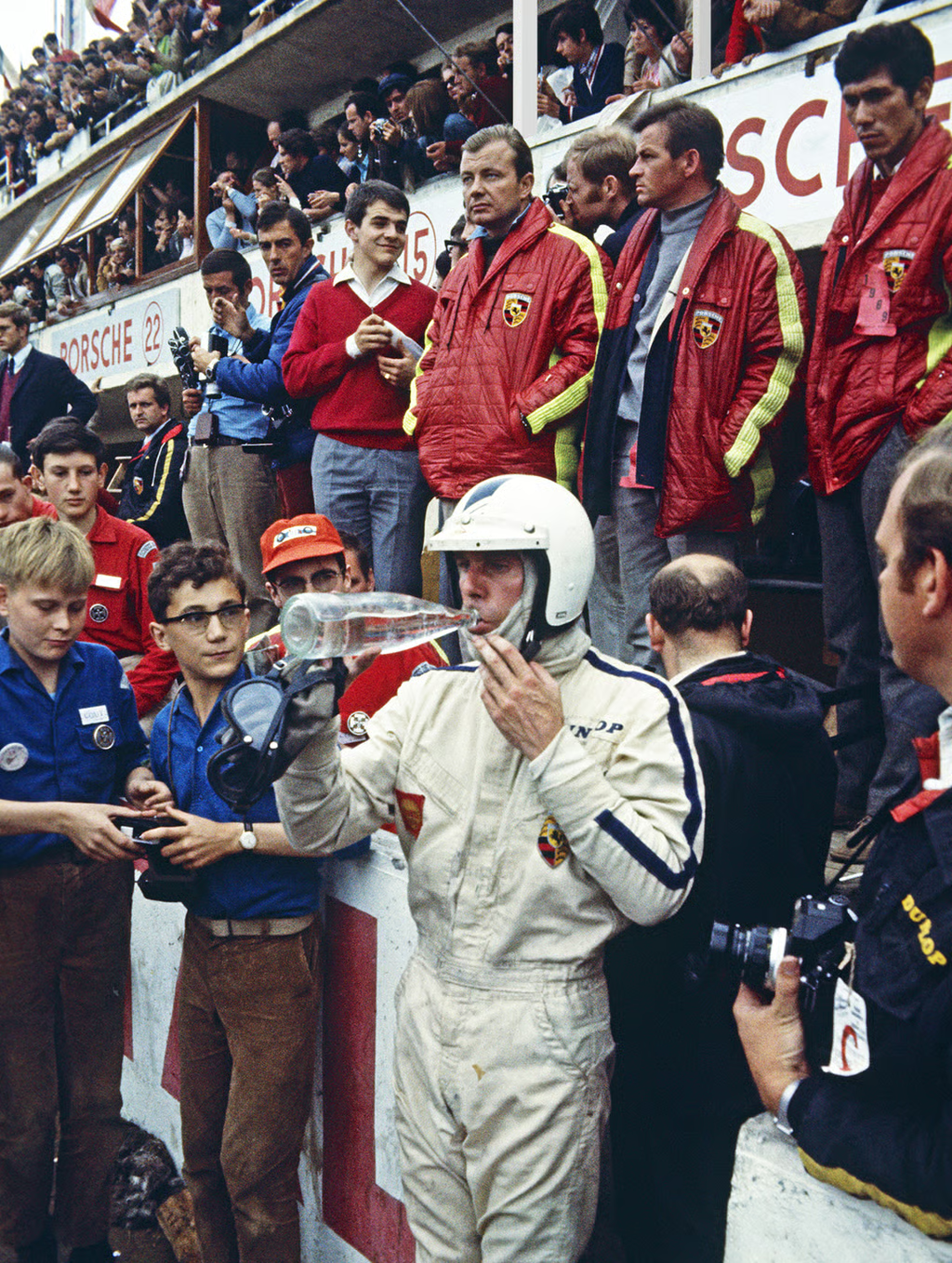
It’s the greatest race in the world. Since 1923, the 24 Hours of Le Mans has been pushing cars and drivers to the absolute limit through day and night, so often in blazing heat or pouring rain, on a track that consists mostly of closed public roads.
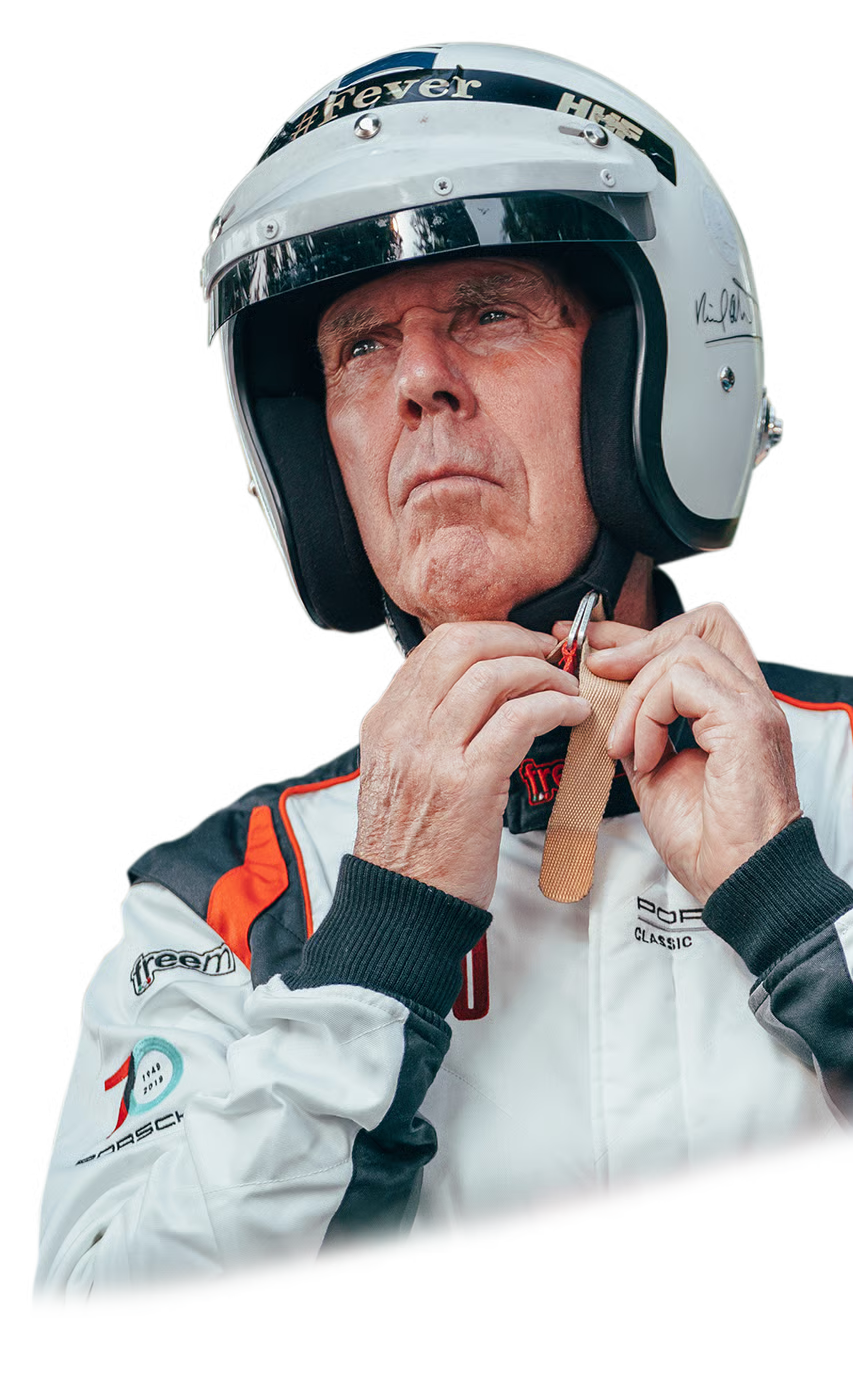
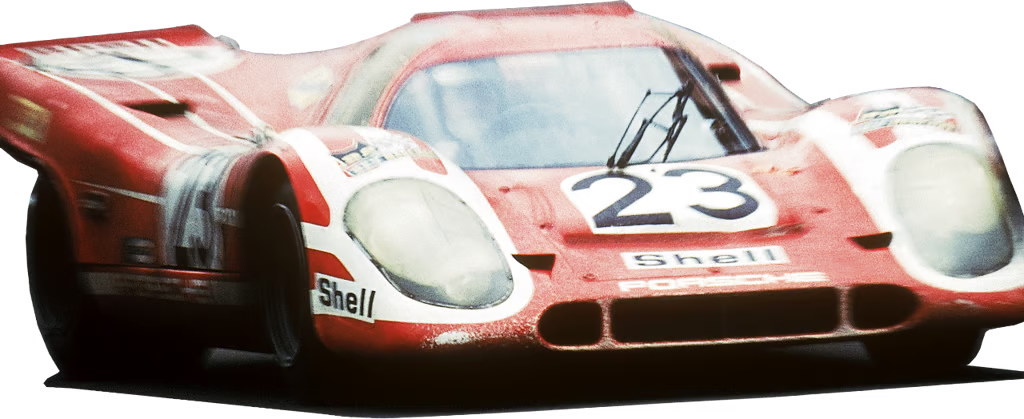
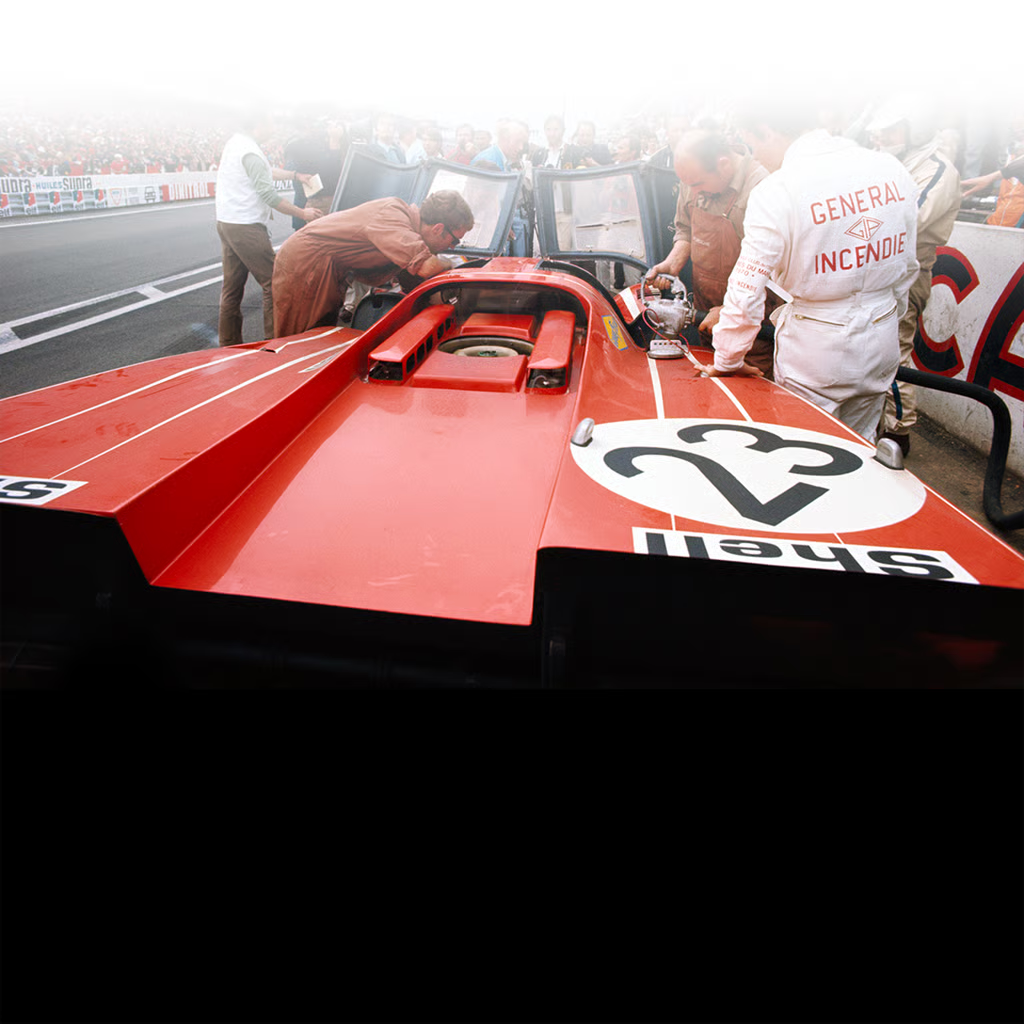
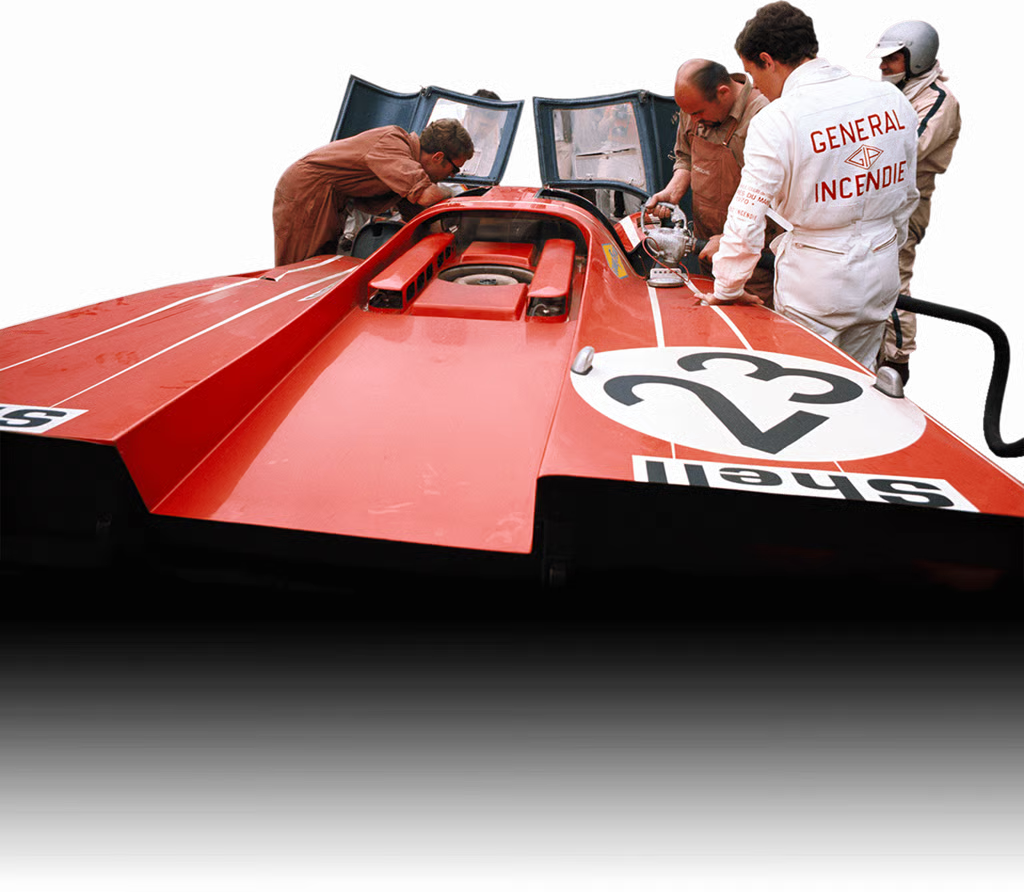
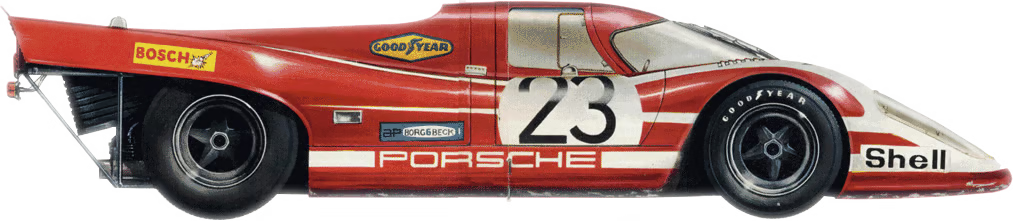
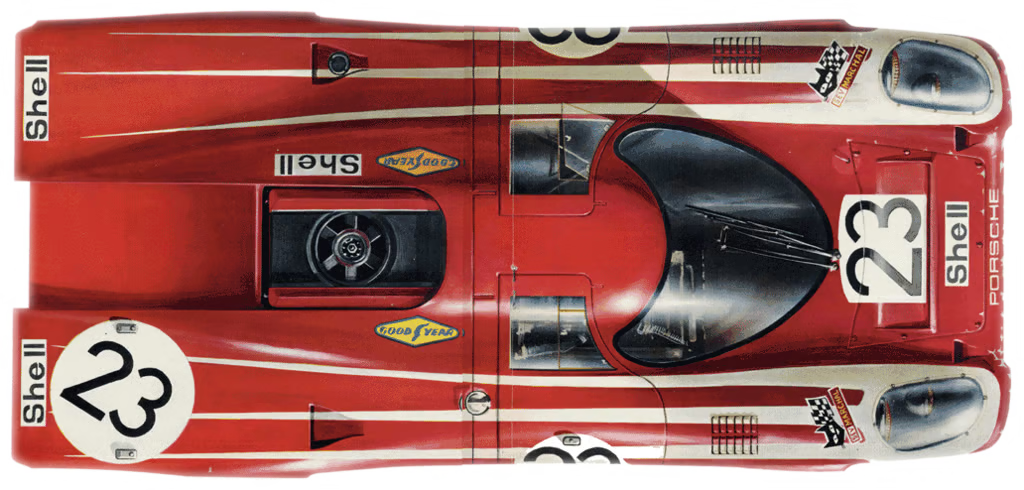
It’s always been dangerous but never more so than in the days of the Porsche 917, pulling over 200mph down the 3.7 mile Mulsanne Straight with barely an ounce of driver protection. And the 917 took its first Le Mans win 50 years ago driven
by Richard Attwood and Hans Herrman in terrible conditions,
as Richard explains…


The drivers




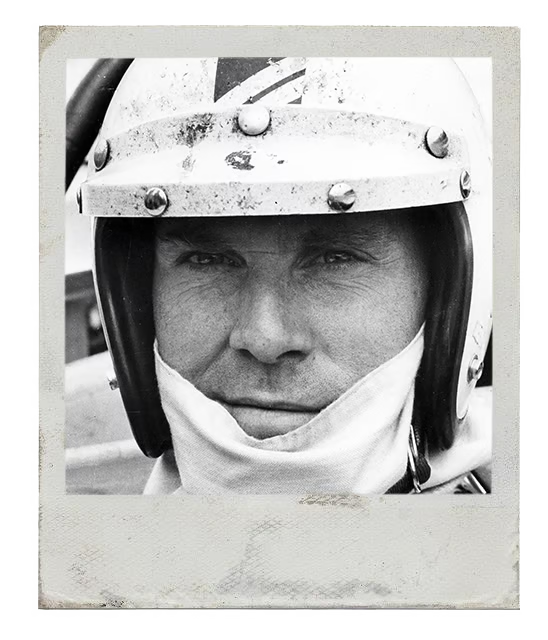



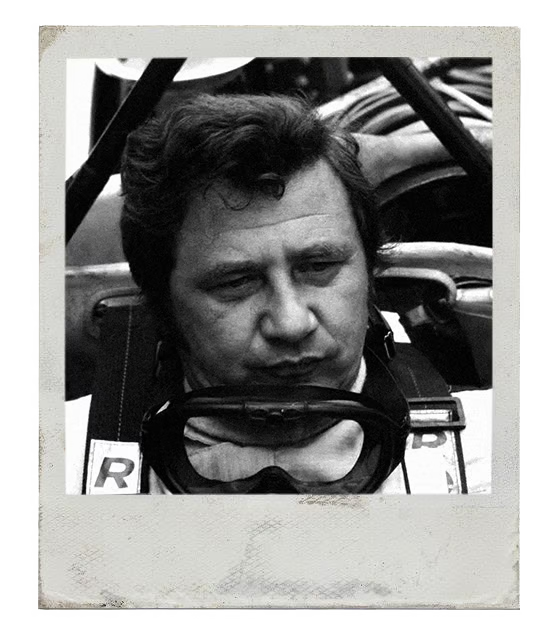



Creating something that ignores time – both physically and in terms of its design. That is a perfect triumph.
ferry porsche



It’s the greatest race in the world. Since 1923, the 24 Hours
of Le Mans has been pushing cars and drivers to the absolute limit through day and night, so often in blazing heat or pouring rain, on a track that consists mostly of closed public roads.
It’s always been dangerous but never more so than in the days of the Porsche 917, pulling over 200mph down the 3.7 mile Mulsanne Straight with barely an ounce of driver protection. And the 917 took its first Le Mans win 50 years ago driven
by Richard Attwood and Hans Herrman in terrible conditions,
as Richard explains…
The first time I drove a 917 was at Le Mans in 1969, and I immediately realised it was a right handful, just horrendous.
There’s a kink down the end of the Mulsanne Straight as you get towards Mulsanne corner. With any car I’ve driven before or after, taking it flat out has been no problem at all. With this car it was a massive problem; we had to reduce speed, we had to try and lean the car to the left hand side to get
it to go around the corner at all. And the rest of the lap?
It was all a nightmare!
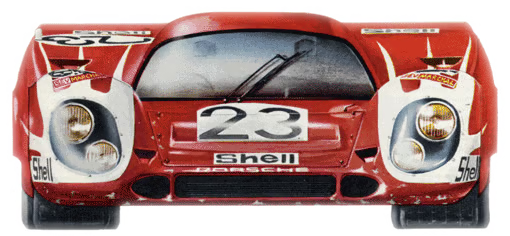
0-62 mph
(100 km/h) in
2.3 seconds.
0–124 mph
(200 km/h) in
5.3 seconds

The first time I drove a 917 was at Le Mans in 1969, and I immediately realised it was a right handful, just horrendous.
There’s a kink down the end of the Mulsanne Straight as you get towards Mulsanne corner. With any car I’ve driven before or after, taking it flat out has been no problem at all. With this car it was a massive problem; we had to reduce speed, we had to try and lean the car to the left hand side to get
it to go around the corner at all. And the rest of the lap?
It was all a nightmare!
Top speed of
225 mph (362 km/h)
Winner's average speed of 119.30mph (192 km/h)
I didn’t drive that version of the 917 again, nobody did.
The 917 that came out in 1970 was a stable car, they’d done
a huge amount of aerodynamic development. It was fantastic, instability didn't come into it, even though it had no real downforce compared to today's cars – which is why the top speeds of today’s cars down the straight are no faster than they were when we were doing it. It was lovely to drive.
People ask me what was the best and the worst car,
and really it was the same car – the Porsche 917.

The drivers
It’s the greatest race in the world. Since 1923, the 24 Hours
of Le Mans has been pushing cars and drivers to the absolute limit through day and night, so often in blazing heat or pouring rain, on a track that consists mostly of closed public roads.
It’s always been dangerous but never more so than in the days of the Porsche 917, pulling over 200mph down the 3.7 mile Mulsanne Straight with barely an ounce of driver protection. And the 917 took its first Le Mans win 50 years ago driven
by Richard Attwood and Hans Herrman in terrible conditions,
as Richard explains…
LAP TIME (x10 SPEED)
Dunlop
bridge
Dunlop
bridge
km 1
km 2
km 10
km 8
km 9
km 3
km 4
km 12
km 5
km 13
km 6
km 7
Tertre Rouge
Mulsanne straight
(Hunaudieres)
White House
(Maison Blanche)
Dunlop curve
START / FINISH
Mulsanne kink
(courbe des Hunaudieres)
Mulsanne
Indianapolis
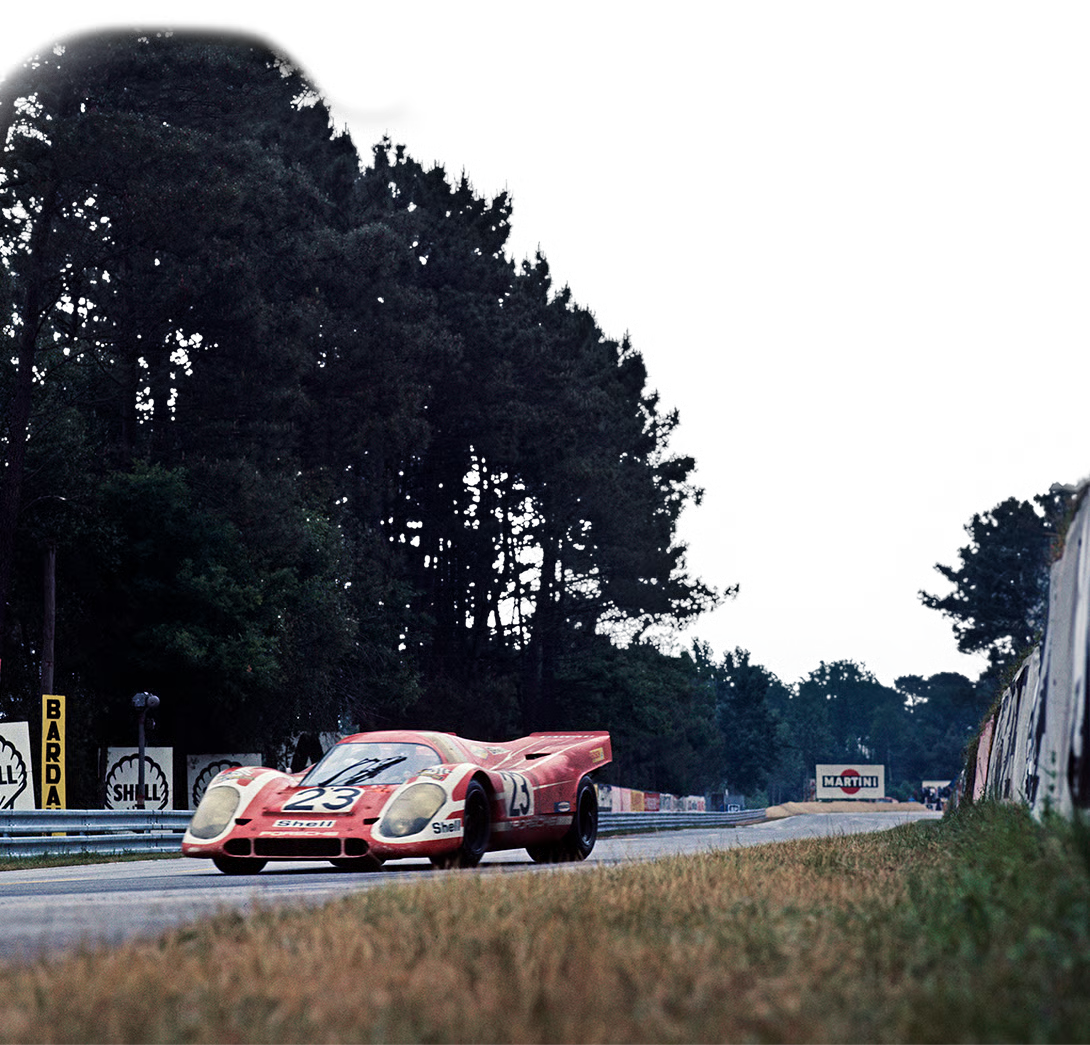
Le Mans was a race I treated differently to other races. If you went at qualifying pace you wouldn’t last, the cars weren’t made to last like that. You could wear a gearbox out, you could wear a gearbox and an engine out, you could probably wear a chassis out if you went like you did in sprint races all the time.
Everywhere at Le Mans is quick. The circuit now is different from how it was back then but there are still a lot of high speed corners. When you’ve been out on the track a few hours the two or three drivers have each had their sessions in the car and the traffic gets much easier as the field depletes itself; everyone’s had their stint so you’ve got used to being overtaken or cars coming up behind you. Fortunately I was almost always in a quick car at Le Mans – that’s better than being in a really slow car because in a slow car you’ve constantly got to be looking behind at who’s coming up.

The cars were made for lightness and performance and speed, not for safety.
Richard Attwood
People ask what it was like driving at over 200mph down the Mulsanne Straight in the rain. In fact, the answer is you didn’t because you had to drive to the conditions. That’s where the judgement of the driver and the skills he has comes into it.
I used to find driving at night just as pleasant as driving in the daytime. The best way at Le Mans to deal with the night is to start when it’s still daylight so you get used to the darkness as it comes on, and you can pick out points easier than you can
if you’re just let onto a dark road.
If I was going to have a big off, I would have preferred to have done it in a Ford GT40 because it had a steel monocoque chassis, which was really strong. A 917 by comparison was not, and if you went off in a 917 you'd make sure you went off backwards, let the engine take it. The cars were made for lightness and performance and speed, not for safety.



The Race


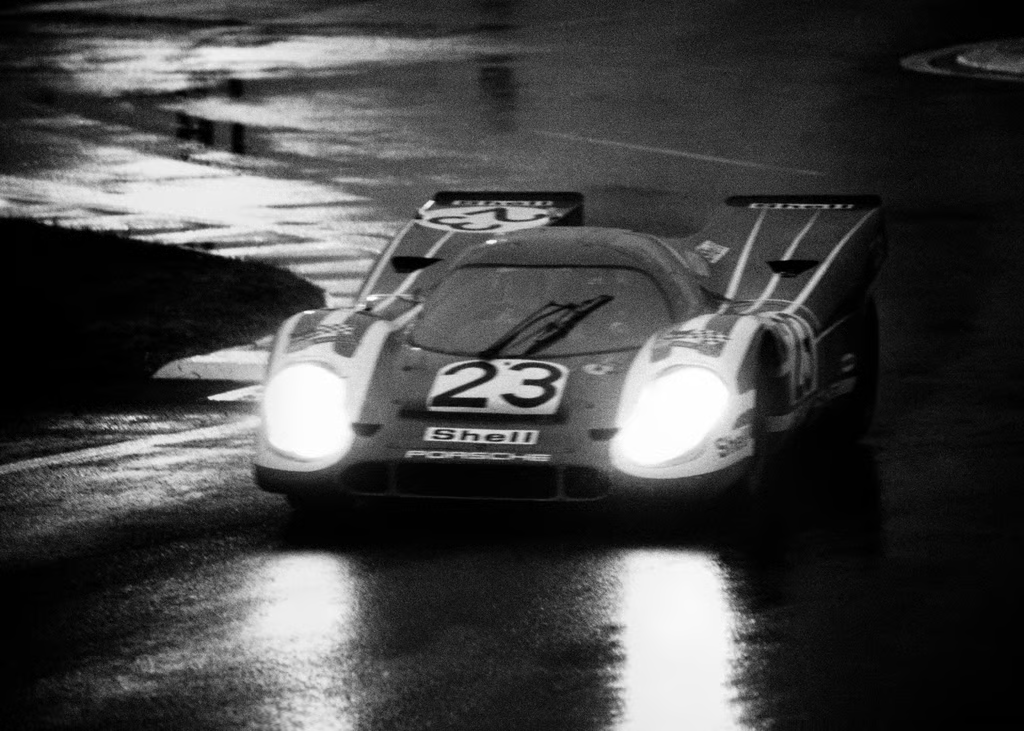
The 1970 24 Hours of Le Mans was one of the wettest in history but it was dry for the 4pm start. It was 5.30pm when the rain started and by 8pm it was torrential – and it didn’t stop until the morning. Richard had chosen the 4.5-litre version of the short-tail 917K rather than the 5-litre or the more aerodynamic 917LH, assuming it would be more reliable and stable, but it was outclassed – and to top it all, Richard was feeling really ill.
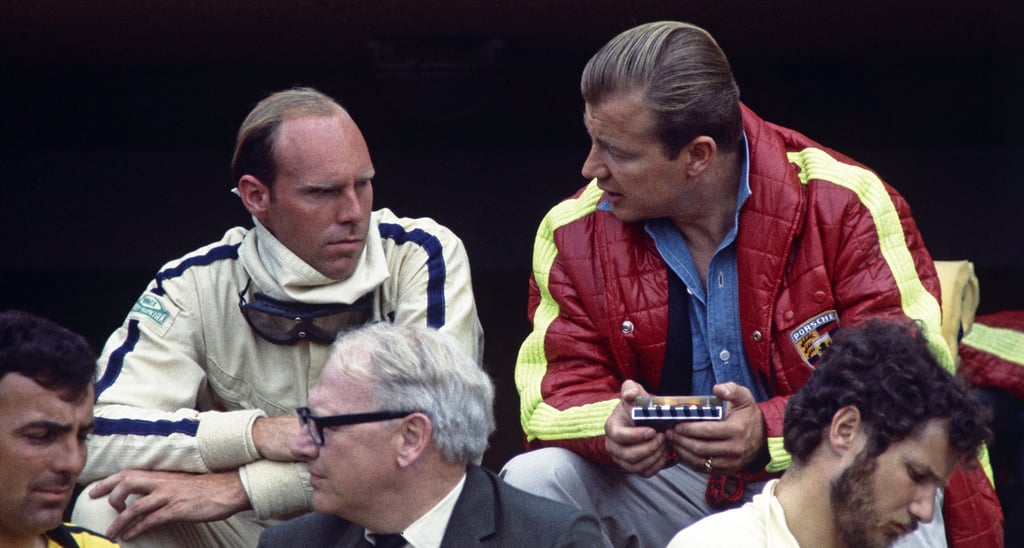


I saw the start of the race because Hans started. I couldn’t believe the driving tactics of everyone. They were trying
to win it on the first lap; it was like a grand prix.
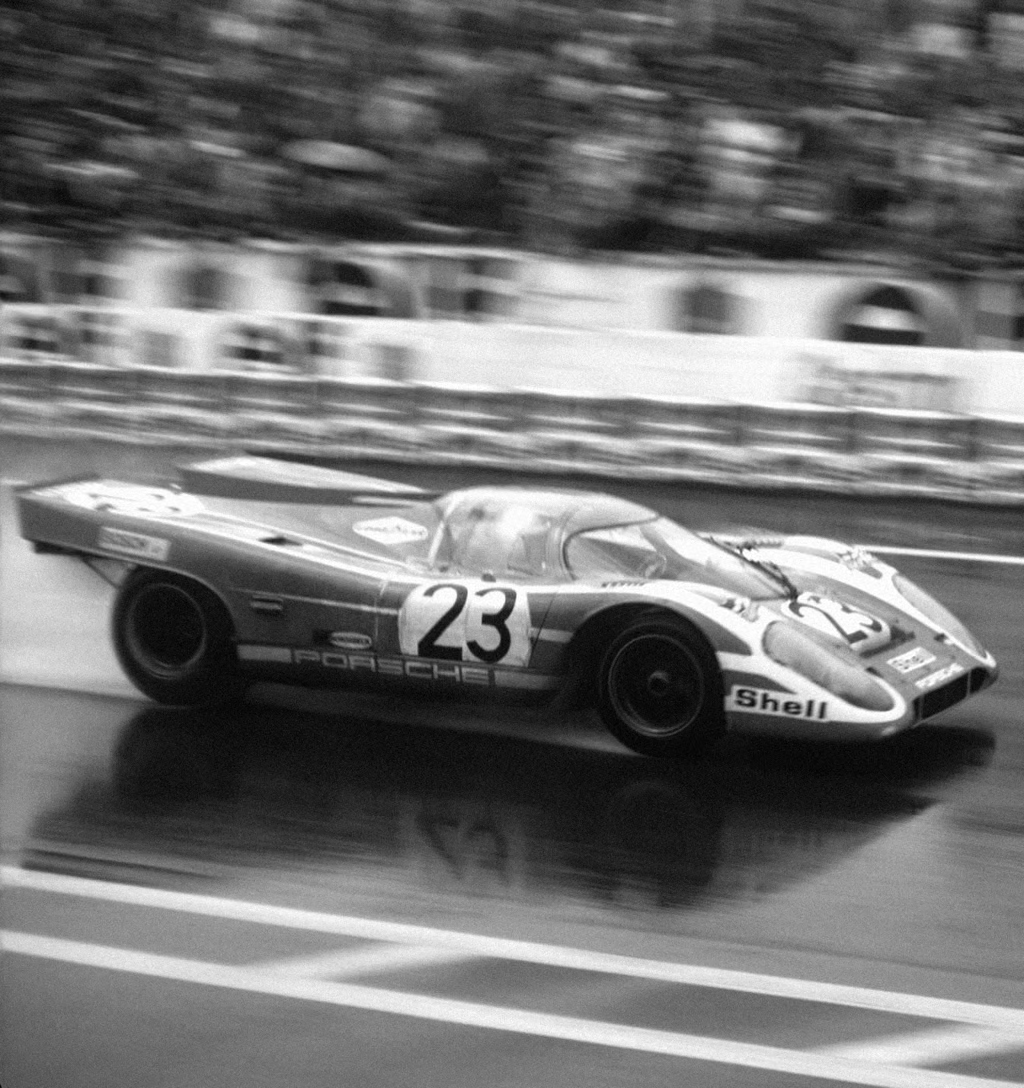
After only ten hours we were in the lead. When I came in
and was given that information, I couldn’t believe it. I had seen a lot of cars drop out but to be in the lead was just insane.
The difficulty or pressure then is to not make any stupid mistakes, as other people had done.
It would have been so easy to do because it rained so much in the second half of that race. Today, they wouldn’t have run the race like that, they’d have stopped it. There was so much rain bouncing off the road. Of course in those days, whether you’ve got death or fire on the track, you just carry on because the race is 24 hours and that’s what you do.


I did have one slide, unexpectedly coming out of the Esses. That could have put us out of the race but that was just one of those things.
The biggest fright we had was that the wet was getting into the electrics. The car was misfiring everywhere, and the more rain that got in there, the more it was misfiring. The concern was that the rain would eventually drown us and that would be the end of that, so artificially I was trying to keep the engine warmer by using the revs a little bit more to heat the engine and get rid of the moisture.
During the race I couldn’t eat anything with any taste.
I survived mostly on milk, which was bland, and as soon as I had any taste in the food it went straight to my glands; my glands were really painful. I didn’t know what was wrong with me until I’d got back home on the Tuesday and I went to the doctors and he told me what had happened – I had mumps!
For the last 14 hours we had to protect the lead but also we had to finish the race. Maybe what I did prevented the engine from stopping, but maybe it didn’t make any difference. At the time, you just don’t know.
When we won, yes there was the euphoria of winning; it was a big race, I knew it was a big race, and it was part of the world championship. It didn’t assume the significance that it does now, but looking back, it is a real highlight of my career. Le Mans was a race that either comes to you or doesn’t. It’s a fickle thing really – but it’s the greatest sports car race in the world.


After The Race
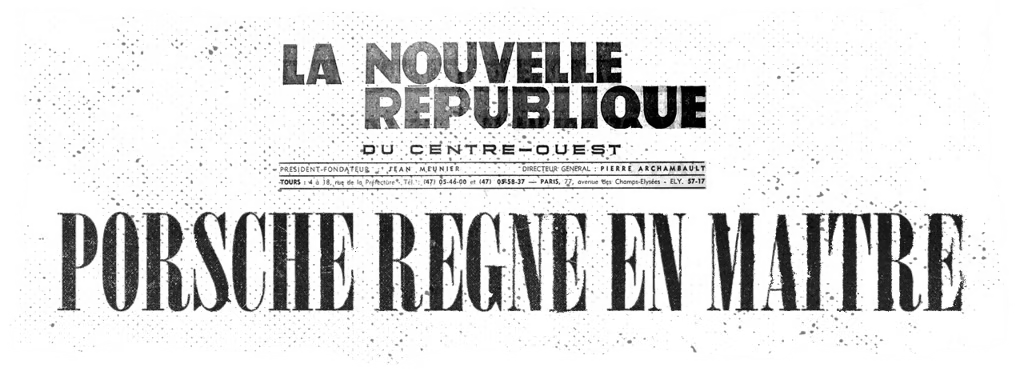
Richard and Hans had given Porsche its first ever overall win, on its 20th appearance at Le Mans. Richard narrowly missed winning the 1971 race, finishing second in a 917, and retired at the end of that season when the 5-litre sports car formula came to an end, increasingly aware of the ever-present danger, his wish to have children and his promise to his father to join the family garage business. He returned to Le Mans in 1984 with the Aston Martin Nimrod but the effort ended when his co-driver crashed, and was then hit by his teammate in the other Nimrod.
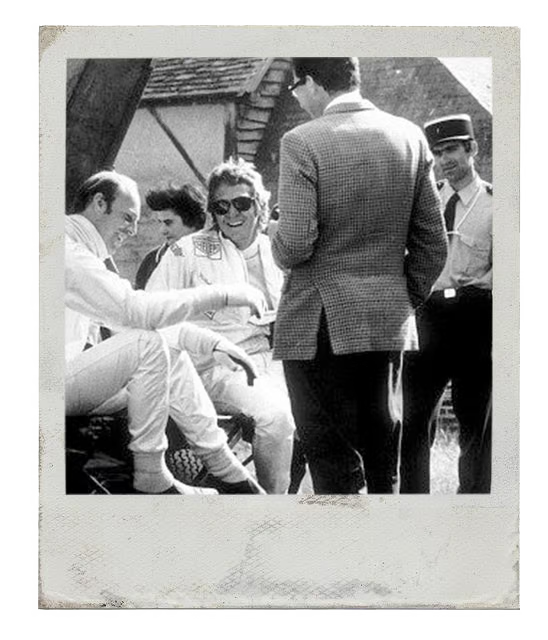
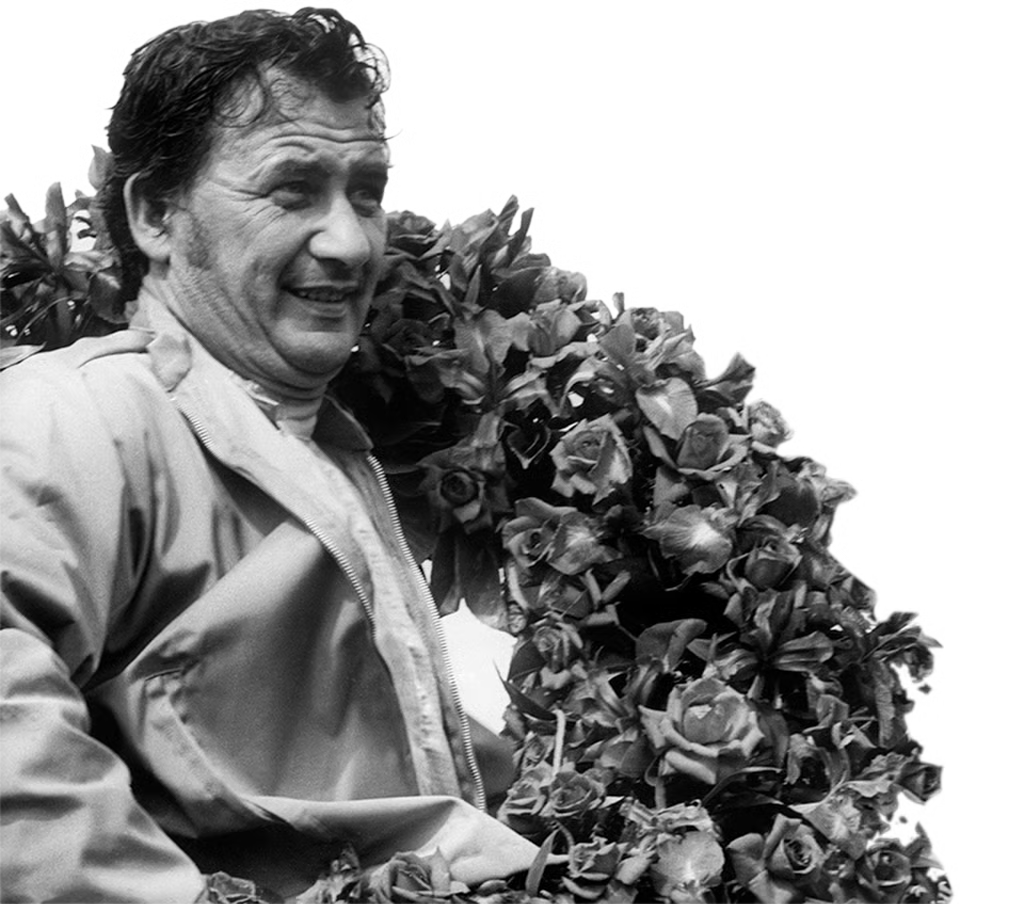
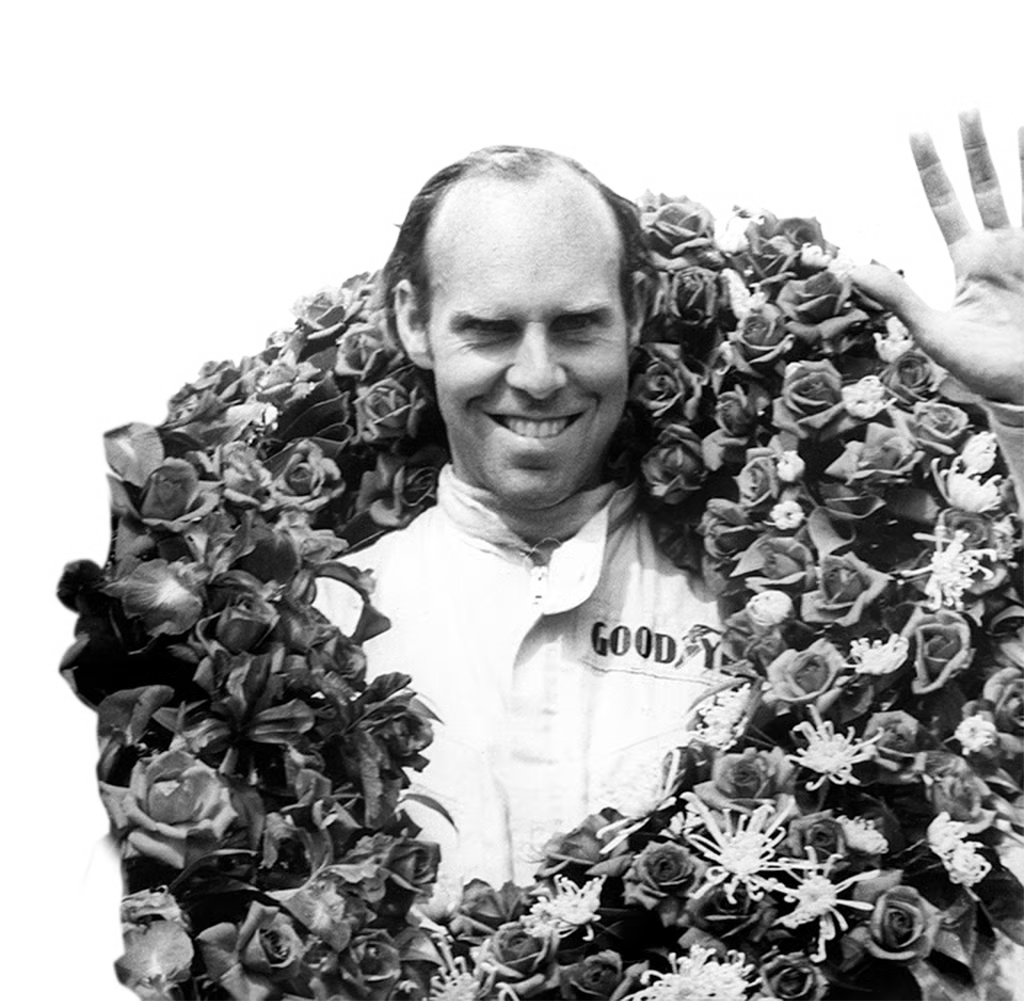

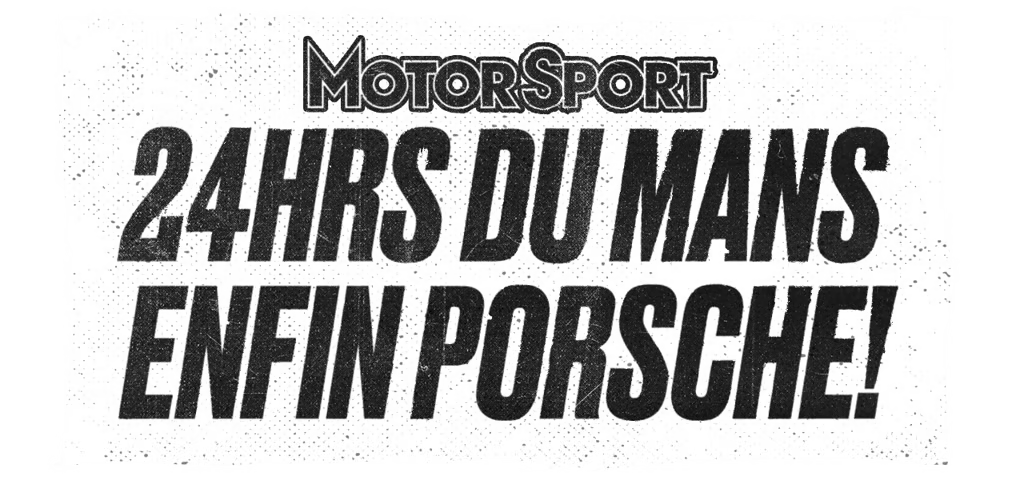
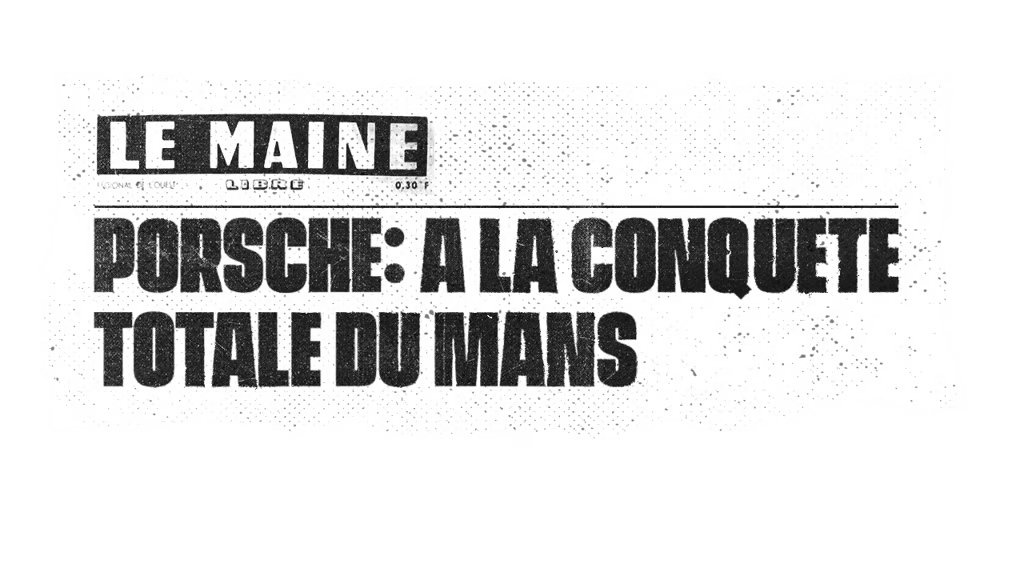
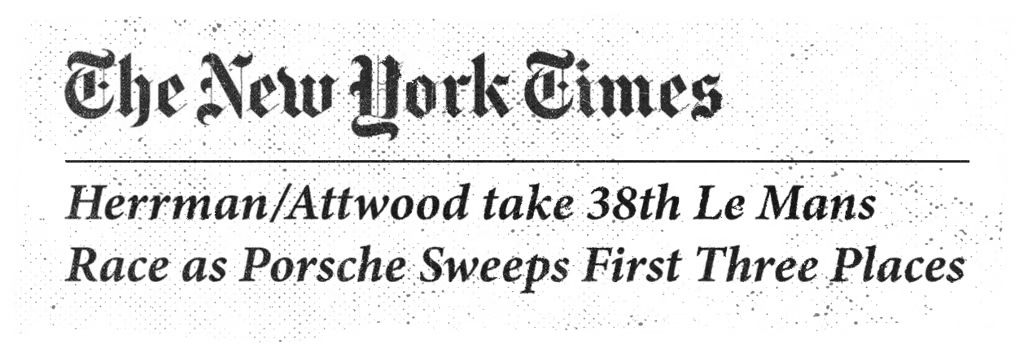
Now Richard regularly appears at historic race events with the 917, and his victory at Le Mans is renowned as one of the greatest ever wins in the 24 Hours. He celebrated his 80th birthday in April 2020.